- 50+ years experience
- Deep subject-matter expertise
- Global Life Sciences network

Laboratory work ensures that research, analysis and testing meets the highest standards of scientific expertise. Learn all about working in Laboratory.
Working in a laboratory in pharma falls into three main areas – R&D, quality control and diagnostics. There are many types of position depending on qualifications and experience: some popular ones are Lab Technician, Lab Analyst, Lab Scientist and Lab Manager. Different companies may use slightly different descriptions, and there are often different levels of these positions. In all cases, you ensure that research, analysis and testing meet the highest standards of scientific expertise, using the appropriate technology and skills. Below are descriptions of working in the three main areas.
Check if we have the R&D lab job opening that suits you!

What is done in an R&D Laboratory?
Research and Development (R&D) is at the forefront of ongoing design and development of products. The R&D team uses a range of research techniques and testing such as performing investigations, modelling, verifying and using other forms of exploration. The areas under study are varied – for example, you could be working with molecular biology (DNA, RNA), histology, immunology, cell culture or biotechnology. The design and development of new or improved products is based on use of the relevant research methodology so R&D plays an important role. This includes advising stakeholders so they make informed decisions, and helping to plan the implementation of the development.
Depending on your entry point, you will need a master’s or PhD in an appropriate Life Sciences subject such as molecular or cell biology, biotechnology, pharmaceutical science or chemistry. After this, your path will depend on the specialism you have chosen, and you will need further qualifications and training as well as more experience in the field so you can progress. For example, you may need to develop project management or general management skills. Many organisations will have more senior roles that you can aspire to such as Lab Scientist or Lab Supervisor/Manager, or you can explore opportunities in other organisations when you are ready to move on.
Use the search options and keywords for the R&D vacancy you are looking for. You don’t see the right vacancy now to further your R&D career in the field you specialise in? Register with us using the button below. And talk to us!
Do you want a new job in Laboratory?

The essence of quality control is to ensure that every product meets agreed (regulatory and internal) standards and specifications at various stages of manufacturing. Anything considered substandard can then be removed from the process to prevent it from entering the market. In pharmaceuticals manufacturing it is key to good manufacturing practices (GMP); it gives assurance that drug products are safe and will perform as expected. Testing and analytical methods depend on the nature of the product(s) but in general will involve sampling products for testing, inspecting the sample and identifying appropriate tests, testing/analysing, and completing reports and documentation.
Qualifications at entry level are likely to include a degree in chemistry or relevant Life Science subject together with some lab experience; more senior roles may call for a master’s degree or PhD and several years’ experience in a quality control and lab work. Your path will depend on further qualifications and training in quality control, particularly current regulations, as well as more experience in the fields. Many organisations will have more senior roles that you can aspire to such as Lab Scientist or Lab Supervisor/Manager, or you can explore opportunities in other organisations when you are ready to move on.
Do you need help in finding the right Quality Control Laboratory job for you?
Use the search options and keywords for the quality control vacancy you are looking for. You don’t see the right vacancy now to further your quality control career in the field you specialise in? Register with us using the button below to create a Job Alert. And talk to us!
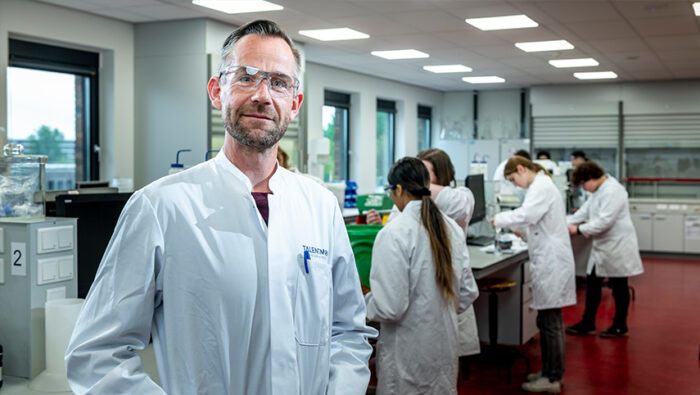
Diagnostic services can be provided by labs in hospitals and medical centres, clinics and care facilities, and may be part of public health services or commercial labs. In all situations the work of the lab is to analyse and test specimens, which arrive with a request for diagnostics. Specialist equipment such as automatic analysers – sometimes more than one type − are used for diagnosis of the sample and subsequent treatment of a patient. When the samples arrive they are checked and recorded, then prepared for analysis. The type of preparation depends on the method required (e.g. centrifuge to separate serum or plasma). The tests and analyses are run, and the results are formally recorded and reported.
Educational requirements will be a bachelor’s degree (WO) as a minimum or master’s in a relevant Life Sciences field, such as biotechnology, microbiology or biochemistry, together with relevant experience. For more senior roles a post-graduate degree will be required.
After this your path will depend on the specialism you have chosen, and you will need further qualifications and training as well as more experience in the field so you can progress. Many organisations will have more senior roles that you can aspire to such as Lab Scientist or Lab Supervisor/Manager, or you can explore opportunities in other organisations when you are ready to move on.
Use the search options and keywords for the diagnostics vacancy you are looking for. You don’t see the right vacancy now to further your diagnostics career in the field you specialise in? Register with us using the button below to create a Job Alert. And talk to us!

Browse all jobs in Laboratory

 English
 Nederlands